
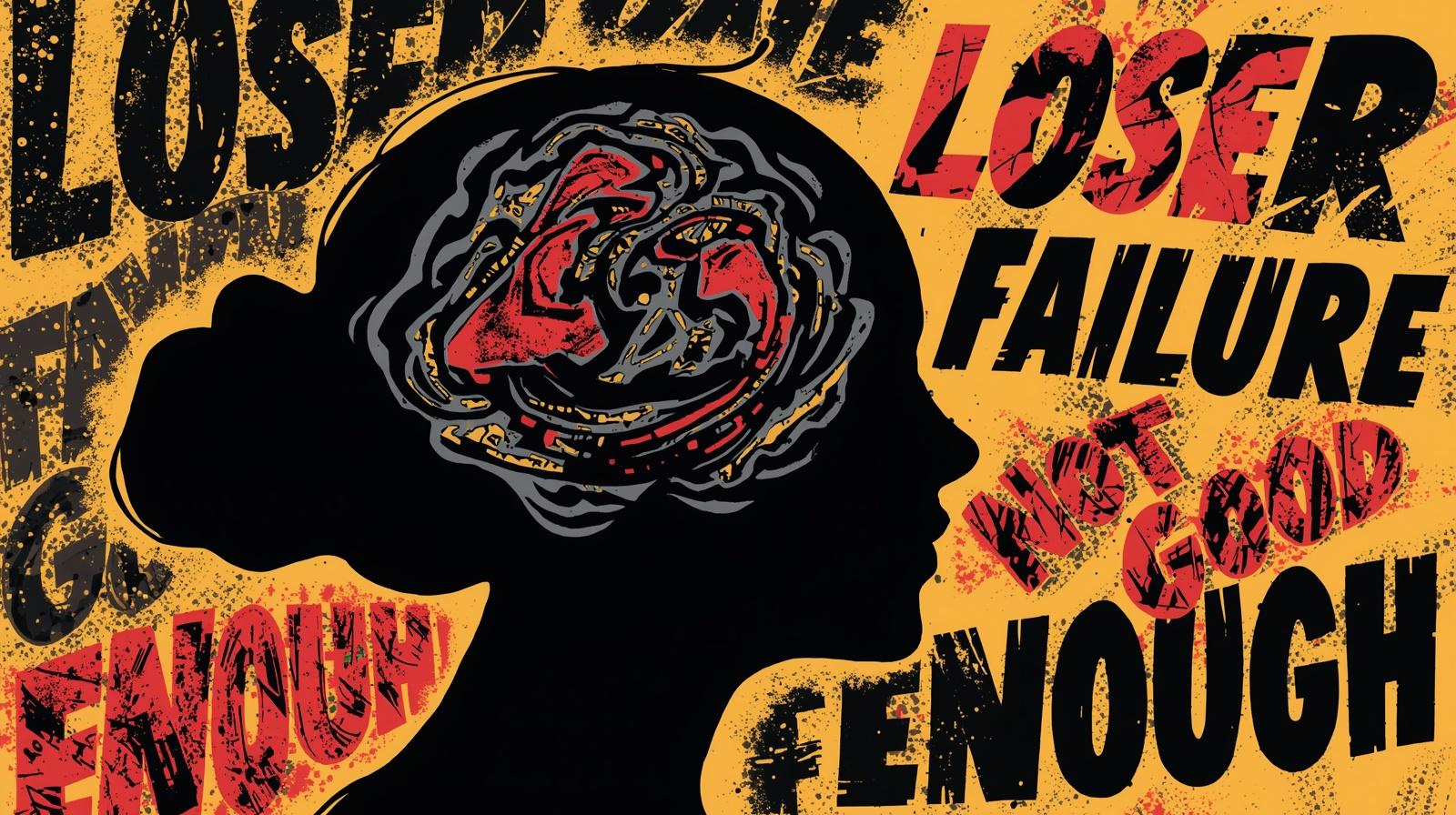
Negative self-talk has a way of sounding like it lives purely in your head.
A few harsh thoughts. Some internal commentary. Maybe a bit of overthinking.
But left unchecked, it doesn’t stay there for long.
It starts making decisions.
When Thoughts Turn Into Actions
If your internal narrative consistently says:
“I’m not good enough.”
“I don’t belong here.”
“This probably won’t work out.”
…your behaviour will, quite reasonably, start to reflect that.
Not because those statements are true, but because they’re treated as if they are.
And once something feels true, you tend to act accordingly.
The Subtle Ways It Shows Up
This isn’t usually dramatic or obvious. It’s often quiet, reasonable, even logical on the surface.
Things like:
- Turning down opportunities
- Settling for less than you actually want
- Pulling back from relationships
- Hiding parts of yourself
- Giving up earlier than you otherwise might
- Avoiding situations where you’ll be seen or evaluated
Individually, each of these can be explained away.
Together, they start to form a pattern.
“It’s Just Not for Me” (Or Is It?)
Turning down opportunities is a classic.
On paper, it might sound like:
“I’m just being realistic.”
“It’s not the right time.”
“Someone else would be better suited.”
And sometimes that’s true, but often, there’s an unspoken layer underneath:
“I’m not capable.”
“I’ll be exposed.”
“I don’t belong in that space.”
Saying no isn’t really about the opportunity – it’s about avoiding the discomfort of potentially being seen and not measuring up.
This is very effective in the short term, and slightly limiting over time.
Quietly Settling
Negative self-talk also has a way of adjusting your expectations downward.
Not in a dramatic, “I deserve nothing” kind of way – more subtly:
- Accepting less in relationships
- Not asking for what you want
- Staying in situations that don’t quite fit
Because if the internal baseline is:
“This is about what I’m worth”
…then anything more can feel excessive. Or even undeserved.
It’s a recalibration of what feels appropriate, rather than a lack of desire.
Withdrawing (But Making It Look Reasonable)
When negative self-talk centres around ideas like:
“I’m too much”
“I’m not enough”
“If people really knew me…”
…relationships can start to feel risky.
So behaviour adjusts.
You might:
- Share less
- Hold back emotionally
- Keep conversations surface-level
- Gradually disengage
We still want connection, but it feels unsafe because connection comes with exposure.
And exposure, according to the internal narrative, is where things tend to go wrong.
The Art of Strategic Hiding
Another common pattern: editing yourself.
This is going to look like:
- Downplaying achievements
- Softening opinions
- Avoiding certain topics
- Keeping parts of yourself quietly out of view
The underlying assumption is:
“This part of me might not be acceptable.”
So behaviour becomes organised around managing that risk.
The result? You show up… but not quite fully, which can create the strange experience of being present and hidden at the same time.
Giving Up (Earlier Than Necessary)
If you already expect something to go badly, it’s hard to stay motivated.
Effort starts to feel a bit pointless:
“What’s the point? It won’t work anyway.”
So you might:
- Stop sooner
- Try less intensely
- Disengage at the first sign of difficulty
And when the outcome isn’t great, it looks like confirmation:
“See? I knew it.”
Except we might struggle to acknowledge where our reduced effort played a role.
We tell ourselves we lack of ability (which isn’t true), so it becomes a pattern of early exit.
Avoiding Being Seen (Even When It’s Positive)
This one’s particularly interesting.
If your internal narrative is:
“I’m not enough”
…then being visible can feel risky.
Because visibility means evaluation.
So you might avoid:
- Speaking up
- Sharing ideas
- Taking on visible roles
- Accepting praise (or quickly deflecting it)
Even positive attention can feel uncomfortable, because it clashes with the established self-image.
“If they really knew…”
So it’s easier to stay slightly under the radar.
The Pattern Behind the Pattern
All of these behaviours have something in common: They keep your external life aligned with your internal beliefs.
If the belief is:
“I’m not good enough”
then your behaviour will (quietly, consistently) move in ways that support that idea.
It’s often not a conscious or deliberate choice, but it is a reliable fall-back behaviour.
The Self-Confirming Loop (It’s a Bit of a Setup)
So here’s where it becomes a cycle:
- Negative self-talk shapes behaviour
- Behaviour influences outcomes
- Outcomes are interpreted as evidence
For example:
- You avoid an opportunity
- You don’t get the experience or success
- You think, “I’m not capable”
which reinforces the original belief.
It looks like proof, but it’s actually a pattern playing itself out.
It’s Not Just Avoidance – It’s Protection
It’s important to say this clearly: these behaviours aren’t random or lazy.
They’re protective.
Each one reduces the chance of:
- Rejection
- Failure
- Embarrassment
- Shame
From that perspective, the system is working exactly as intended.
It’s just optimising for safety, not growth.
The Cost of Staying “Safe”
The difficulty is that protection has side effects.
By avoiding risk, you also avoid:
- New experiences
- Positive outcomes
- Evidence that contradicts the belief
So the inaccurate narrative stays intact because it’s never meaningfully challenged.
Other People Get Pulled Into It Too
These patterns don’t exist in isolation.
They affect how you show up, and therefore how others respond.
For example:
- Withdrawing can be read as disinterest
- Holding back can be read as lack of confidence
- Avoidance can be read as disengagement
And those responses can (unintentionally) reinforce the original belief:
“See? People aren’t that interested.”
Even though the behaviour came first.
So What’s Really Going On?
At a deeper level, your behaviour is trying to stay consistent with your internal world.
The mind likes coherence, so if the story is:
“This is who I am”
then your actions will tend to follow suit, even if that story is outdated. Or incomplete. Or unnecessarily harsh.
A Slightly More Useful Way to Look at It
Instead of asking:
“Why do I keep doing this?”
It can be more helpful to ask:
“What belief would make this behaviour make sense?”
Because most of the time, the behaviour does make sense, given the story behind it.
Why This Matters
Changing negative self-talk isn’t just about thinking differently.
It’s also about noticing:
- Where it’s shaping your choices
- Where it’s limiting your actions
- Where it’s quietly steering your life
We don’t have to combat negative self-talk in a dramatic, overnight way – this is impossible and ineffective.
Instead we start to shift the inner narrative with small, consistent decisions.
Once you start to see that link between thought and behaviour, you’re no longer just reacting to the pattern.
You’re beginning to interrupt it.
Which, quietly but significantly, changes the direction things can go.
Want to work with this pattern more closely? Take the ‘pay what you can’ YouTube workshop.
Join my growing community on Instagram @changemakersassemble for more insights into pain patterns and how to use them to transform your life…and our world.
© 2026 Dr Madeleine Smith. All rights reserved.
Leave a Reply